
Medical Waste Disposal for Veterinary Clinics: A Complete Compliance Guide

Quick Answer: Veterinary clinics generate several types of regulated medical waste, including sharps, biohazardous waste, pathological waste, pharmaceutical waste, chemical waste, and radioactive waste. Proper segregation, storage, documentation, and disposal are essential to comply with EPA, OSHA, DEA, DOT, and state regulations, helping clinics protect staff, avoid penalties, and maintain a safe healthcare environment. |
Veterinary clinics treat animals every day, but they also generate regulated medical waste that must be handled carefully. From used needles and contaminated materials to expired medications and animal tissues, every waste category has specific disposal requirements. While veterinary facilities do not treat human patients, they are still required to comply with multiple federal and state regulations governing medical waste management.
This guide explains the different types of veterinary medical waste, the applicable regulations, best practices for handling and disposal, and how veterinary clinics can maintain compliance while protecting staff, patients, and the environment.
Why Veterinary Medical Waste Compliance Matters
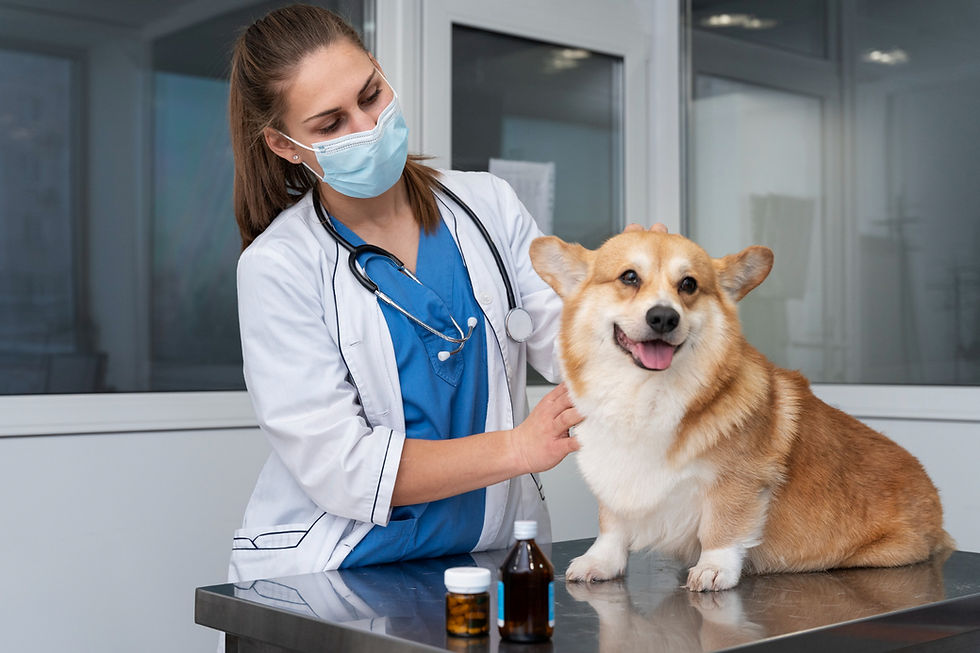
Veterinary clinics generate waste that carries real infectious and environmental risk. Animals harbor zoonotic pathogens, which are microorganisms that can transmit disease from animals to humans. Bacteria such as Mycobacterium bovis, Listeria monocytogenes, and Coxiella burnetii are among those commonly associated with animal tissues and carcasses. These pathogens do not become safe simply because they are placed in a trash bag.
Beyond infectious risk, veterinary clinics use many of the same pharmaceutical agents as human healthcare settings, including controlled substances, anesthetics, chemotherapy drugs used in veterinary oncology, and hazardous chemicals. When those substances are improperly discarded, they enter waterways, soil, and waste systems in ways that harm ecosystems and create public health exposure.
The healthcare sector as a whole generates approximately 5.9 million tons of medical waste annually in the United States. Veterinary clinics contribute a meaningful share of that total, and their regulatory obligations reflect the genuine risks their waste poses.
Types of Medical Waste Generated by Veterinary Clinics
Before disposal, waste must be correctly identified and segregated. Mixing waste categories is one of the most commonly cited compliance failures in veterinary settings and can escalate disposal costs, trigger regulatory penalties, and create safety hazards for staff and downstream waste handlers downstream.
Medical Waste Categories at a Glance
Waste Type | Examples | Disposal Requirement |
Sharps Waste | Needles, scalpels, syringes | Approved sharps containers |
Biohazardous Waste | Blood-soaked gauze, PPE | Red biohazard bags |
Pathological Waste | Animal tissues, organs, carcasses | Licensed disposal facility |
Pharmaceutical Waste | Expired medications | Licensed pharmaceutical waste vendor |
Chemical Waste | Formalin, disinfectants | Hazardous waste disposal |
Radioactive Waste | Radioiodine waste | NRC-approved disposal |
Sharps Waste
Sharps waste includes needles, syringes, scalpel blades, lancets, catheter stylets, broken glass vials, slides, and other items that can puncture or cut. These must be placed directly after use into approved, puncture-resistant, leak-proof sharps containers with a biohazard label and replaced before they are full.
Biohazardous and Infectious Waste
Biohazardous waste includes blood-soaked gauze and bandages, used gloves and gowns, contaminated IV tubing, culture dishes, swabs, wipes, and other materials that have been exposed to blood or body fluids.
Because of zoonotic disease risks, this waste should be placed in red biohazard bags inside rigid containers, kept separate from general waste, and handled by a licensed medical waste disposal vendor.
Pathological Waste
Pathological waste includes animal tissues, organs, body parts, surgical fluids, biopsy specimens, animal carcasses, and euthanized remains. Disposal requirements vary by state and may include licensed cremation, incineration, or approved burial.
Animal carcasses and tissues should not be placed in regular trash, and clinics should follow applicable state and local requirements.
Pharmaceutical Waste
Veterinary pharmaceutical waste generally falls into three categories:
Hazardous Pharmaceutical Waste: Includes RCRA P-listed or U-listed drugs and pharmaceuticals with hazardous characteristics. Examples include certain chemotherapy drugs, euthanasia solutions, and heavy-metal compounds. These require black containers and disposal through licensed hazardous waste channels.
Non-Hazardous Pharmaceutical Waste: Includes common medications such as antibiotics, anti-inflammatories, and vaccines that do not meet RCRA hazardous criteria. These should be segregated and disposed of through an appropriate licensed vendor rather than flushed or placed in regular trash.
Controlled Substance Waste: Includes controlled drugs such as ketamine, fentanyl, and morphine. These are regulated by the DEA and must be rendered non-retrievable before disposal, with required records maintained. Schedule II substances require DEA Form 222 for procurement and DEA Form 41 for destruction records.
California has additional requirements under the Medical Waste Management Act for pharmaceutical waste labeled "Pharmaceutical Waste, Incineration Only," including sealed storage and removal by a registered medical waste hauler within 90 days.
Chemical Waste
Chemical waste may include disinfectants, sterilization agents, anesthetic gases such as isoflurane and nitrous oxide, X-ray developing chemicals, formalin, pesticides, and parasite-control substances.
Anesthetic gases can create staff exposure risks when scavenging systems are inadequate. Chemical waste is subject to RCRA and state environmental requirements and should not be poured down drains unless specifically permitted.
Radioactive Waste
Veterinary clinics performing nuclear scintigraphy, radioiodine therapy, or other radionuclide procedures may generate radioactive waste regulated by the NRC or state radiation control programs.
This waste must follow ALARA principles and cannot enter standard medical waste streams. Only appropriately licensed facilities should handle these procedures and their radioactive waste.
Veterinary Medical Waste Color Coding
Waste Type | Container Color | Examples |
Sharps | Red/Yellow | Needles, scalpels |
Biohazard | Red | Blood-soaked gauze |
Hazardous Pharma | Black | RCRA drugs |
Trace Chemo | Purple | Chemotherapy waste |
Pharmaceutical Incineration | Blue/White | State dependent |
Veterinary Medical Waste Regulations
Veterinary clinic waste management is governed by multiple federal and state agencies. Each agency oversees a different part of the waste management process, from hazardous pharmaceutical disposal and employee safety to controlled substances, transportation, and state-specific requirements.
1. EPA
The EPA governs hazardous pharmaceutical waste under RCRA and establishes specific requirements for healthcare facilities, including veterinary practices.
The EPA governs hazardous pharmaceutical waste under RCRA, including the 2019 Hazardous Waste Pharmaceuticals Rule, updated in 2025, that applies specifically to healthcare facilities, including veterinary practices.
2. OSHA
OSHA governs employee safety and workplace exposure risks associated with veterinary medical waste.
OSHA governs employee safety in the workplace, including the Bloodborne Pathogens Standard (29 CFR 1910.1030), the Hazard Communication Standard (29 CFR 1910.1200), and PPE requirements.
OSHA's interpretation of the Bloodborne Pathogens Standard has been extended to veterinary settings even though the standard was written with human pathogens in mind, because zoonotic disease risk creates equivalent occupational exposure.
3. DEA
The DEA regulates controlled substances used by veterinary clinics and establishes requirements for their inventory, documentation, and disposal.
The DEA governs all controlled substances under the Controlled Substances Act and 21 CFR Part 1317.
4. DOT
The DOT regulates the transportation of hazardous materials, including regulated medical waste transported off-site.
The DOT governs the transport of hazardous materials, including medical waste under 49 CFR Parts 171 through 173. If your clinic ships regulated medical waste off-site, the packaging, labeling, documentation, and staff training requirements of the DOT apply.
5. State Regulations
State regulations can add requirements that are stricter than federal rules and are often critical to a veterinary clinic's day-to-day compliance.
State agencies are often the most directly relevant regulatory bodies for day-to-day compliance. Many states require veterinary clinics to register as medical waste generators and maintain detailed records of waste volumes, manifests, and disposal certificates. Failure to do so can trigger audits, fines, and license suspension.
Regulatory Framework at a Glance
Regulatory Agency | Primary Responsibility | Key Requirements |
EPA | Hazardous pharmaceutical waste | RCRA requirements and hazardous pharmaceutical waste management |
OSHA | Employee and workplace safety | Bloodborne Pathogens Standard, Hazard Communication Standard, PPE |
DEA | Controlled substances | Inventory, record-keeping, controlled substance disposal |
DOT | Transportation | Packaging, labeling, documentation, and staff training for off-site transport |
State Agencies | State-specific medical waste requirements | Generator registration, manifests, disposal certificates, storage and disposal requirements |
Best Practices for Veterinary Medical Waste Management
1. Segregate at the Point of Generation
The single most important operational habit in veterinary medical waste management is correct segregation at the moment waste is created. Every treatment room, surgery suite, and diagnostic area should have clearly labeled, color-coded containers for each waste category: sharps containers for sharps, red bags for biohazardous waste, black containers for hazardous pharmaceutical waste, and purple containers for trace chemotherapy waste where applicable.
Training staff to segregate correctly at the source eliminates the downstream problems of mixed waste streams, which are more expensive to dispose of, create regulatory exposure, and can result in the entire contents of a container being classified and managed at the level of the most hazardous item it contains.
2. Know Your Generator Status
Most states classify medical waste generators by volume: typically less than 50 pounds per month as a small generator and over 50 pounds per month as a large generator. The rules for storage time, container requirements, transport documentation, and disposal frequency differ between these categories.
A clinic that has grown significantly in patient volume may have crossed a generator threshold without realizing it, changing the compliance requirements that apply.
3. Maintain Complete Documentation
Many states require veterinary clinics to maintain waste manifests, disposal certificates, and pickup records for at least two to three years. Controlled substance records must be maintained for at least two years under DEA requirements. Complete documentation is the primary evidence a clinic can present during a regulatory inspection or audit to demonstrate that its waste has been handled compliantly.
A missing manifest from a pickup six months ago becomes a compliance gap the moment an inspector asks for it.
4. Use a Licensed Medical Waste Disposal Vendor
Working with a licensed, certified medical waste disposal vendor removes much of the uncertainty from the compliance equation. A reputable vendor will supply compliant containers, schedule regular pickups calibrated to your waste volume, provide manifests and certificates of disposal for every pickup, and stay current with regulatory changes that affect your obligations.
This is not a function that benefits from cost-cutting by switching to unlicensed or informal haulers.
5. Train Staff Consistently and Document It
Every team member who handles waste must be trained on what each waste category includes, which container it goes in, how containers should be sealed and stored, and what to do in the event of a spill or exposure. OSHA requires annual bloodborne pathogen training for all employees with potential occupational exposure, documented with records of who was trained, what was covered, and when.
Training that was conducted once at onboarding and never repeated is not compliant.
Frequently Asked Questions (FAQs)
Q1: Are veterinary clinics subject to the same medical waste regulations as human healthcare facilities?
In most meaningful respects, yes. Veterinary clinics must comply with OSHA's Bloodborne Pathogens Standard, EPA regulations under RCRA for hazardous pharmaceutical waste, DEA regulations for controlled substance disposal, and DOT regulations for the transport of regulated medical waste.
State regulations often impose additional requirements specific to veterinary practices, particularly around pathological waste and animal carcass disposal. While some state laws define medical waste specifically in terms of human patients, the federal regulatory framework and most state programs treat veterinary settings as subject to equivalent standards.
Q2: How should a veterinary clinic dispose of expired or unused medications?
The correct disposal method depends on the classification of the medication. Controlled substances must be rendered non-retrievable using a DEA-compliant method, with disposal documented on DEA Form 41. RCRA hazardous pharmaceuticals must be collected in black containers and disposed of through a licensed hazardous waste hauler.
Non-hazardous pharmaceuticals should be collected by a licensed pharmaceutical waste vendor. Medications should never be flushed down a drain or placed in regular trash. For clinics with low volumes of non-controlled, non-hazardous medications, mail-back programs approved for pharmaceutical waste disposal offer a convenient option.
Q3: How must animal carcasses and pathological waste be disposed of?
The rules governing animal carcass and pathological waste disposal are primarily state-level and vary significantly by jurisdiction. Common approved disposal methods include cremation at a licensed facility, licensed incineration, and in some jurisdictions, burial in designated areas that meet local environmental standards.
Animal carcasses and surgical tissues cannot be placed in regular municipal solid waste in most states. Clinics should confirm the applicable requirements with their state environmental or public health agency and ensure that any facility used for cremation or incineration holds the appropriate licenses.
Q4: What are the DEA requirements for controlled substance disposal in veterinary clinics?
Veterinary clinics that maintain controlled substances must keep detailed inventory records for all scheduled drugs. Schedule II controlled substances require DEA Form 222 for procurement and DEA Form 41 to document destruction.
Schedules III through V require detailed transfer records and DEA Form 41 for destruction. All controlled substances must be rendered non-retrievable before disposal, meaning they cannot simply be discarded in a waste bin.
Approved disposal methods include use of a DEA-registered reverse distributor, an authorized on-site destruction device with witnessed destruction, or a DEA-authorized disposal kiosk. Any theft or significant loss of a controlled substance must be reported immediately to the DEA using Form 106.
Q5: What container colors should veterinary clinics use for different types of waste?
The standard color-coding system used across veterinary and healthcare settings assigns specific colors to specific waste categories. Red containers and bags are for biohazardous and regulated medical waste. Black containers are for RCRA hazardous pharmaceutical waste, including P-listed and U-listed drugs.
Purple containers are for trace chemotherapy waste. Yellow containers are sometimes used for chemotherapy waste in certain jurisdictions. Standard sharps containers are typically red or yellow with a biohazard label.
Pharmaceutical waste that requires incineration but is not RCRA hazardous is typically collected in blue or white containers. Clinics should confirm the specific color-coding system used by their licensed waste vendor, as some variation exists across providers.
Q6: What are the consequences of improper medical waste disposal for veterinary clinics?
The consequences operate across multiple dimensions. Regulatory penalties can be severe: OSHA fines for serious violations currently exceed $15,000 per infraction, with willful violations reaching seven times that amount. State hazardous waste violations can carry penalties up to $37,500 per day in some jurisdictions.
DEA violations for improper controlled substance disposal are federal offenses that can result in fines, loss of DEA registration, and criminal prosecution. Beyond financial penalties, a compliance failure that results in a staff injury, a public exposure incident, or environmental contamination carries reputational consequences and potential civil liability.
License suspension is also a documented outcome for clinics found to be in repeated or serious violation of state medical waste regulations.


Comments